When the forecast starts showing triple digits, most people’s first instinct is to crank the AC, grab something cold, and not move. That’s a reasonable start. But staying cool and safe during a real heat wave takes a bit more than that. And some of the most commonly repeated advice doesn’t work as well as people think.
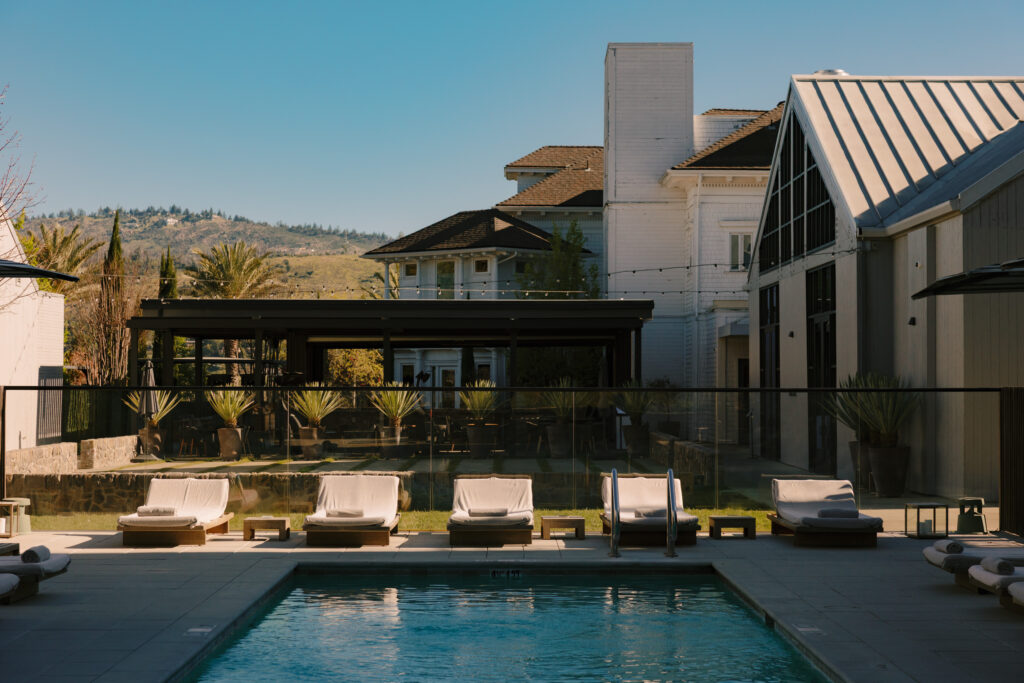
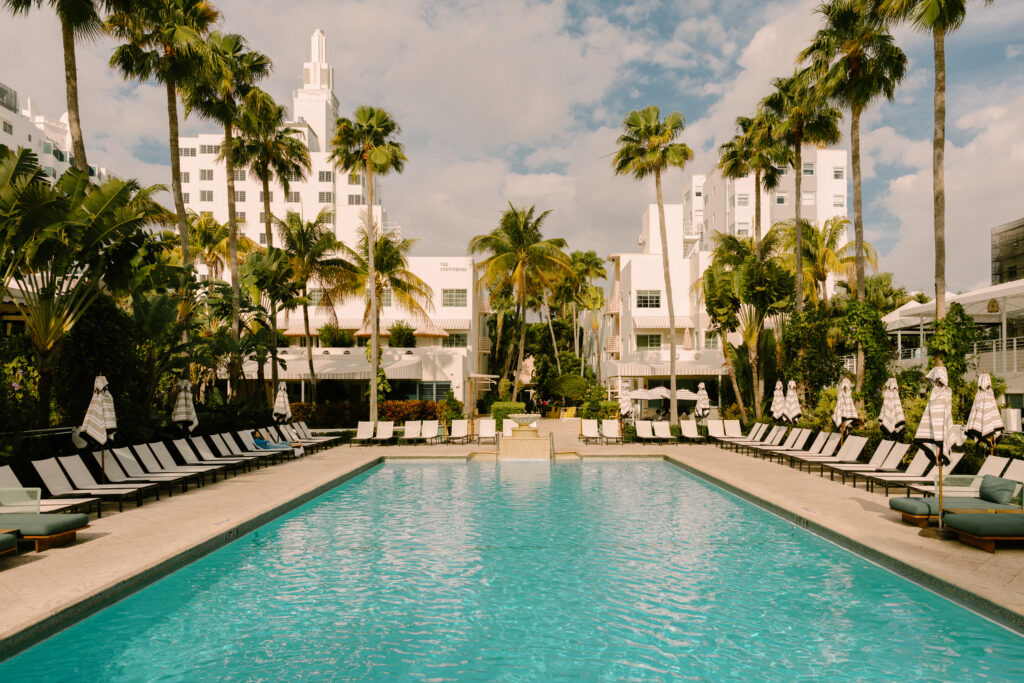
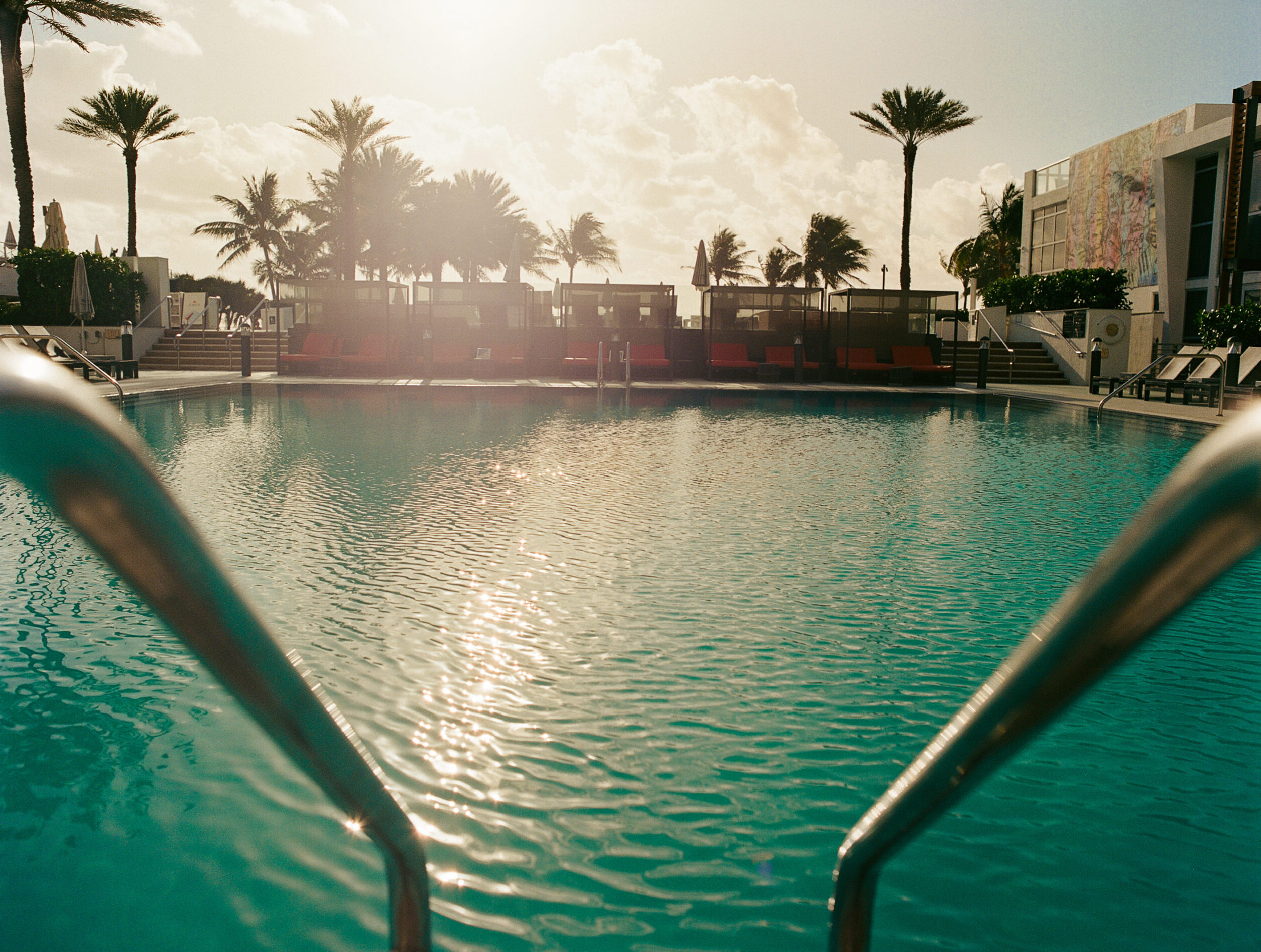
One of the most reliable ways to stay cool during a hot stretch, especially if your home doesn’t hold a comfortable temperature, is to spend a few hours at a hotel pool or air-conditioned resort space. Booking a ResortPass day pass gets you pool access at a hotel near you for the day, no overnight stay required, starting at $25. Specific properties worth booking by city are further down.
First: what happens during a heat wave, and what researchers say to do about it.

What is a heat dome, and why does it make heat waves so brutal?
A heat dome forms when a large area of high pressure parks over a region and traps warm air underneath it, similar to a lid holding heat over a pot. The pattern is stagnant by nature, which means weak winds, rising humidity, and heat that builds for days instead of breaking overnight. The National Weather Service classifies a heat wave as high temperatures of 90°F or more for three consecutive days or longer.
What makes heat domes particularly rough is the overnight problem: when nighttime lows stay in the 70s and 80s, the body doesn’t get a real chance to recover between hot days. That cumulative effect is what makes a multi-day heat event more dangerous than a single scorching afternoon.
The warning signs you shouldn’t ignore
Heat is the deadliest weather event in the US in a typical year, more so than hurricanes or tornadoes, and it affects more people than the “vulnerable populations” label suggests. According to the CDC, the signs of overheating include muscle cramping, dizziness, unusually heavy sweating, shortness of breath, headaches, weakness, and nausea. If you or someone near you notices these symptoms, the move is to get to a cool space and start hydrating immediately, not to push through it.
Confusion, a rapid pulse, or hot skin that’s stopped sweating are signs of heat stroke, which is a medical emergency. Heat illness builds faster than most people expect, especially during a stretch like this one where consecutive hot days and warm nights don’t give the body a real chance to recover.
How to stay cool in the heat, according to the research
Most heat advice boils down to “drink water and find AC,” which is true but incomplete. A team of exercise physiologists from the University of Ottawa and Harvard’s T.H. Chan School of Public Health, writing in the Canadian Medical Association Journal this past November, laid out what actually moves the needle (and what doesn’t help as much as people assume).
If you have to be outside or doing anything physical, build in real rest. The recommendation is 15 to 45 minutes of rest in shade or air conditioning per hour of activity, depending on how strenuous the work is. Drink water steadily through the day instead of waiting until you’re thirsty, and skip sugary or caffeinated drinks, which work against hydration rather than for it.
Use cool spaces strategically: Libraries, malls, and cooling centers help, but the benefit fades once you return to a hot environment. If your home doesn’t have reliable AC, a longer stretch somewhere cool does more good than a brief stop. This is one reason booking a ResortPass hotel pool day pass is worth considering: a few hours in a properly air-conditioned building with a pool is genuine relief, not just a temporary fix.
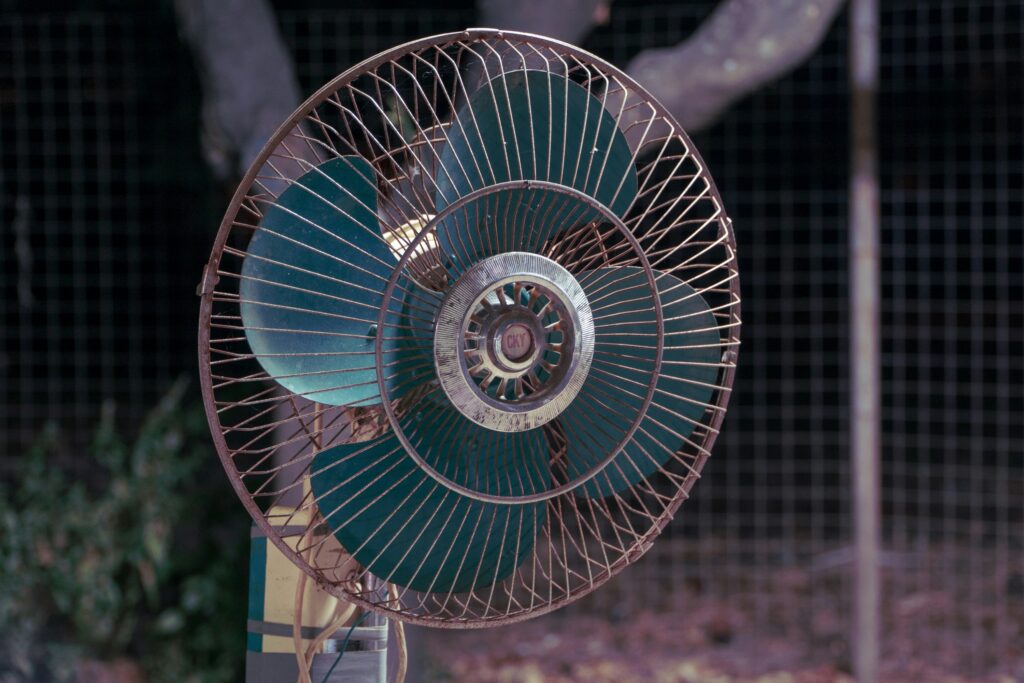
Fans help your body cool through sweat evaporation, but they have a ceiling. For older adults specifically, fans become less effective above about 91°F and can actually add to heat strain above 104°F. Misting your skin while using a fan helps at temperatures of 100°F or lower. Cold, wet towels on the neck, or immersing your wrists and feet in cool water—or taking advantage of a nearby pool—can offer real relief at 97°F or below.
Air conditioning remains the single most effective way to prevent heat-related illness and death, and researchers recommend keeping indoor temperatures at or below 79°F when possible.
Access hotel pools, spas, and resort amenities by the day. No overnight stay required.
Browse ResortPassThe cooling habits that don’t always work, and why people use them anyway
A multi-city study of how people in Detroit, New York City, Philadelphia, and Phoenix actually try to stay cool, published in the journal Global Environmental Change, found that a lot of well-meaning habits don’t work the way people assume, and that the reasons behind them are worth understanding.
Running a fan with the windows closed is one of the most common mistakes: A fan only helps when it can pull a cool breeze through a space or push hot air back out; with the windows shut, it’s just recirculating the same hot air. As mentioned in the study cited above, fans become less effective above ~91°F and can make things worse over 104°F.
Waiting until you’re thirsty to drink water is another: by the time thirst kicks in, hydration is already behind. Researchers also found that some older adults, especially those on certain medications, don’t register how hot they actually are and end up overdressed in extreme heat without realizing it; interviewees described seniors sitting outside in sweaters on the hottest days of summer simply because they didn’t feel it. It’s a good reminder to check in on your older relatives, especially if they live in one of the impacted areas.
Misconceptions about cooling centers are also common: Many people assumed cooling centers were only for unhoused individuals, didn’t realize they could bring pets, or didn’t trust the agencies running them, particularly in immigrant communities. In reality, most cooling centers—including converted recreation centers, libraries, and senior centers—are open to anyone who needs them.
The most protective behavior researchers found wasn’t a cooling trick at all—it was a phone call: Family check-ins, even a quick “it’s supposed to hit 100 today, are you somewhere cool?”, consistently showed up as one of the strongest factors in keeping older adults safe.
At the same time, researchers heard repeatedly from seniors who avoided asking their own adult children for help during heat waves because they didn’t want to be a burden. If you have an older neighbor or relative nearby, plan to check in early, not just once the heat peaks.
A heat safety checklist for this week
- Hydrate steadily through the day. Don’t wait until you’re thirsty, and treat iced coffee or alcohol as a separate category from actual hydration.
- Move outdoor errands, workouts, or yard work to early morning or after 7pm.
- Take real rest breaks in shade or AC, roughly every hour if you’re working or exercising outside, more often if it’s especially hot or humid.
- Check on older neighbors and relatives, especially anyone who lives alone or doesn’t have reliable air conditioning.
- Never leave kids, pets, or anyone else in a parked car, even for a few minutes.
- Know the early signs of heat exhaustion (heavy sweating, dizziness, nausea, headache, weakness) so you can act before it turns into heat stroke.
- If your home doesn’t stay below 80°F, plan a few hours somewhere that does, whether that’s a cooling center, a library, or a hotel pool.
Skip the heat entirely: pools to book today
Sometimes the most useful heat advice isn’t a strategy, it’s a destination. A hotel day pass gets you pool access (and reliable air conditioning indoors) at hotels near you, no overnight stay required.
New York City
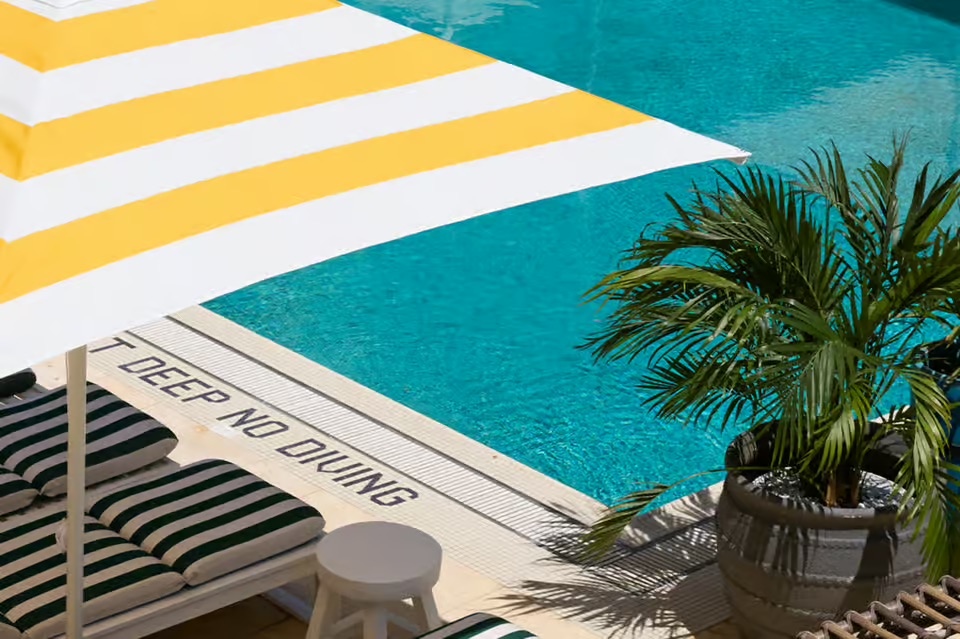
The city’s hotel pools are some of the best heat relief around right now. The newly-renovated pool at CODA Williamsburg has pool passes, cabanas, and even VIP lounge seating available to book, many with champagne included. For something quieter, Virgin Hotels New York City has a rooftop pool tucked into Lower Manhattan featuring shaded cabanas and food and drink available for purchase.
Browse pool day passes in New York City.
Boston, MA
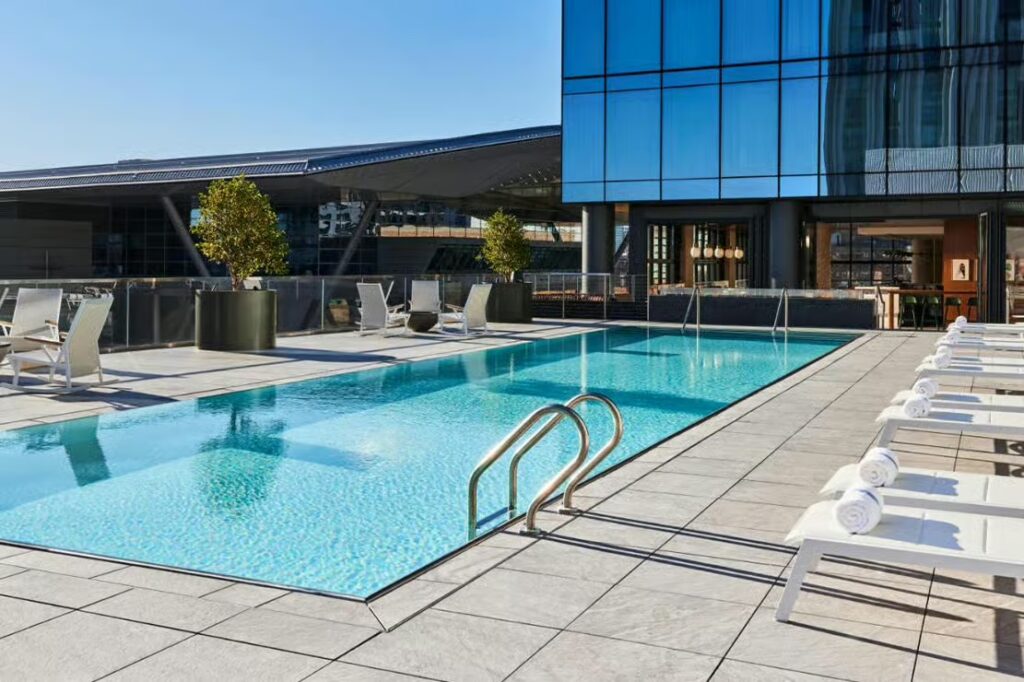
Boston’s hotel pools fly under the radar more than they should. Omni Boston Hotel at the Seaport keeps its outdoor pool open year-round, and InterContinental Boston has a 45-foot indoor lap pool overlooking the historic waterfront—so you can swim while staying entirely out of the heat.
Browse pool day passes in Boston.
Washington, D.C.
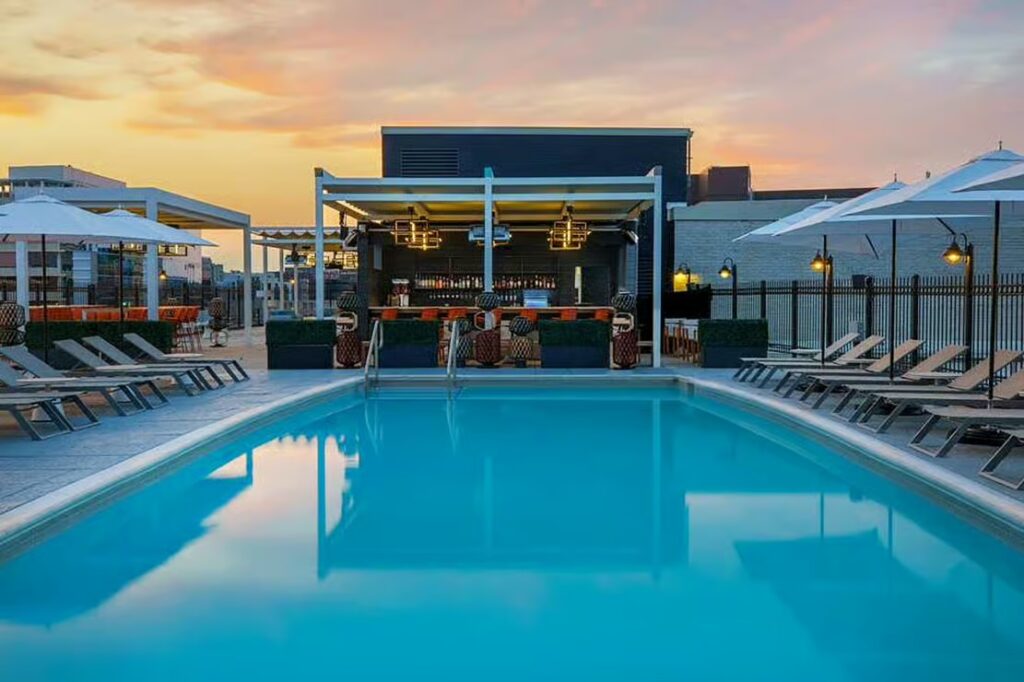
DC’s rooftop scene is perfect for a heatwave: pool access, a breeze, plenty of shaded seating. YOTEL Washington DC has the largest rooftop pool deck in the District, with shaded cabanas and skyline views, and the Washington Hilton‘s outdoor pool looks out at the Washington Monument. Browse pool day passes in Washington, D.C.
Philadelphia, PA
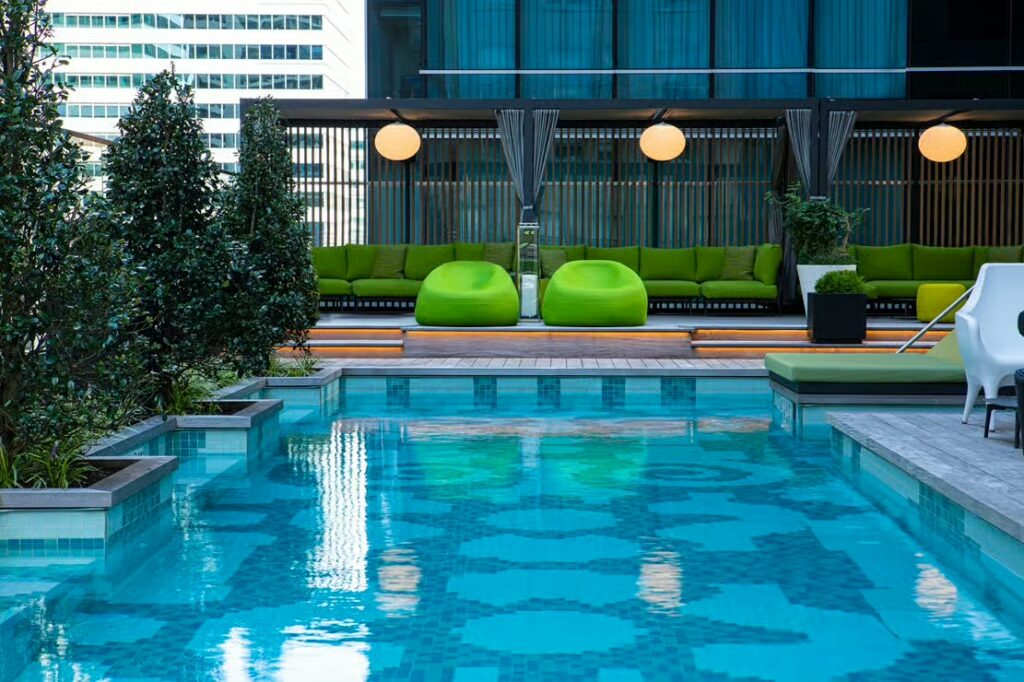
With the city on track to potentially tie its all-time June heat record, a pool day here is less of a luxury and more of a plan. W Philadelphia has an outdoor pool with city views, and Sonesta Philadelphia Rittenhouse Square sits right in the heart of Center City. Browse pool day passes in Philadelphia.
Nashville & the Southeast

The heat is forecast to linger across the Southeast into next weekend too. In Nashville, Four Seasons Hotel & Spa Nashville has a rooftop infinity-edge pool and hot tub with sweeping skyline views, and W Nashville’s pool features luxe cabanas and a seasonal poolside bar.
Browse pool day passes in Nashville.
Frequently asked questions about heat waves
What is a heat dome, and why does it make heat waves more dangerous?
A heat dome forms when a large area of high pressure settles over a region and traps warm air beneath it, like a lid holding heat over a pot. Because the air can’t circulate out, heat builds for days instead of breaking overnight, which is why this week’s forecast includes both record daytime highs and unusually warm nighttime lows in cities like New York and Washington, D.C.
What’s the fastest way to cool your body down in extreme heat?
Cool water is the fastest option researchers point to. Immersing your feet or forearms in cool water, or applying cold, wet towels to your neck, can offer real relief at temperatures up to about 97°F. Above that, getting to an air-conditioned space matters more than any single trick.
At what temperature does a fan stop helping?
Fans generally help up to around 104°F by speeding up sweat evaporation. For older adults, that threshold is lower: fans become less effective above about 91°F and can add to heat strain above 104°F, which is why pairing a fan with misting or a cool, damp cloth works better once it’s genuinely hot out.
What are the warning signs of heat exhaustion?
The CDC lists muscle cramping, dizziness, unusually heavy sweating, shortness of breath, headaches, weakness, and nausea. If you or someone nearby has these symptoms, get to a cool space and start hydrating right away. Confusion, a rapid pulse, or hot skin that’s stopped sweating are signs of heat stroke, which needs emergency medical attention.
Where can I go to cool off if I don’t have air conditioning?
Most cities open cooling centers during heat emergencies, often in libraries, senior centers, or recreation centers, and many are open to anyone, not just specific groups. Public pools, malls, and movie theaters work too. A hotel day pass is another option: it gets you pool access and air conditioning at a hotel nearby for a few hours, no overnight stay required, starting at just $25.
Sources
- CBS News / AP, “Heat dome to scorch major U.S. cities this week. Maps show the forecast and warnings,” updated June 30, 2026. https://www.cbsnews.com/news/dangerous-long-heat-wave-large-swathes-of-us-this-week/
- Ghaffar N, Jones J, Baker C. “Just How Hot Will the U.S. Get This Week? Here’s a Day-by-Day Forecast.” The New York Times, June 29, 2026. https://www.nytimes.com/2026/06/29/weather/us-heat-wave-forecast.html
- O’Connor FK, Kenny GP, Meade RD. “Staying cool during heat exposure.” CMAJ. 2025;197:E1343. doi: 10.1503/cmaj.250951. https://doi.org/10.1503/cmaj.250951
- Sampson NR, Gronlund CJ, Buxton MA, Catalano L, White-Newsome JL, Conlon KC, O’Neill MS, McCormick S, Parker EA. “Staying cool in a changing climate: Reaching vulnerable populations during heat events.” Global Environmental Change. 2013;23(2):475-484. doi: 10.1016/j.gloenvcha.2012.12.011. https://doi.org/10.1016/j.gloenvcha.2012.12.011
- Centers for Disease Control and Prevention (CDC). “About Heat and Your Health.” National Center for Environmental Health. Last reviewed July 25, 2025. https://www.cdc.gov/heat-health/about/index.html