There’s a version of wellness culture that operates on vibes and wishful thinking—and then there’s Finnish sauna. The difference is a few decades of clinical research.
Sauna bathing has been studied more rigorously than almost any other wellness practice, partly because Finland has produced the world’s most committed longitudinal cohort researchers, and partly because in a country where saunas outnumber cars, the practice was always going to attract serious scientific attention.
Whether you’re new to sauna culture or you’re looking for reassurance that your addiction is valid (us, too!), here’s the research worth knowing:
What is a sauna, technically?
A sauna is a small, wood-lined room heated to high temperatures with low humidity. The Finnish version, which is the subject of most of the research cited in this piece, uses dry heat generated by an electric or wood-burning heater topped with stones. Pouring water over those stones produces a brief surge of steam, temporarily raising humidity without fundamentally changing the character of the experience.
This distinguishes it from a steam room, which operates at lower temperatures with humidity at 100 percent, and from an infrared sauna, which uses radiant heat at much cooler ambient temperatures and has a considerably thinner research base.
The traditional ritual involves alternating periods of heat exposure, typically 5 to 20 minutes, with cooling off in cold water, a cool shower, or simply open air, followed by rehydration. This cycle is how Finnish sauna culture has always worked, and it’s how most of the clinical studies were structured. A single, prolonged sit is not the same experience.
Hotel and resort saunas are almost always Finnish-style dry saunas, which makes them the right setting if you’re trying to replicate the conditions this research describes.

What happens to your body in a sauna: Benefits of sauna bathing
A traditional Finnish sauna runs at 80 to 100 degrees Celsius, or 176 to 212°F.
Within minutes, heart rate climbs, blood vessels dilate, and cardiac output increases by 60 to 70 percent. The skin receives a surge of blood flow, reaching 50 to 70 percent of total cardiac output. A 2018 review in Mayo Clinic Proceedings observed that sauna’s physiological changes “correspond to those produced by moderate- or high-intensity physical activity.” Which means that sitting still, sweating, and doing nothing is actually doing quite a lot.
The usual caveat applies: correlation is not causation, and most of the headline findings come from observational studies, not controlled trials. But when the same associations appear across different studies, different cohorts, and different measurement windows spanning decades, a picture forms.
The cardiovascular case for sauna use
The most compelling evidence involves the heart. In the Kuopio Ischemic Heart Disease study, a Finnish cohort followed for more than 20 years, men who used saunas four to seven times per week had substantially lower rates of sudden cardiac death, fatal cardiovascular disease, and all-cause mortality than those who went once weekly. The association held after researchers controlled for age, weight, blood pressure, cholesterol, smoking, alcohol, diabetes, fitness, and income.
The blood pressure numbers are specific and well-documented. In a study of 100 participants with cardiovascular risk factors, a 30-minute sauna session reduced average systolic blood pressure from 137 to 130 mmHg and diastolic pressure from 82 to 75 mmHg, both with statistical significance. Over a 24.7-year follow-up of 1,621 men, those bathing four to seven times weekly had a 47 percent relative reduction in the risk of developing hypertension compared with once-a-week bathers. Stroke risk fell by 62 percent in frequent users. Venous thromboembolism risk dropped by 33 percent with two to three weekly sessions compared with one or fewer.
These are not modest numbers.
How saunas impact the brain
The cognitive findings are, perhaps, the most striking. Among 2,315 Finnish men followed from middle age, those using saunas four to seven times weekly had a 66 percent lower risk of developing dementia and a 65 percent lower risk of Alzheimer’s disease compared with once-a-week users. A separate study following nearly 14,000 people for 39 years found that frequent sauna bathing was associated with a 53 percent reduced risk of dementia over the first two decades of follow-up.
The mechanism researchers point to involves heat shock proteins, which heat exposure produces in elevated quantities. These proteins protect against the kind of protein aggregation that characterizes neurodegenerative disease. The theory is still developing, but it is testable and grounded, not speculative.
Sleep, mood, and the endorphin question
From the same Finnish cohort: men using saunas four to seven times weekly had a 78 percent reduced risk of developing psychotic disorders compared with once-weekly bathers. The endorphin mechanism is relevant here. Sauna exposure measurably increases beta-endorphin levels, which contribute to the post-session calm that regular users tend to describe in some variation of the same words. One study monitoring sleep patterns found that deep sleep increased by more than 70 percent in the first two hours following a sauna session.
That feeling is not imaginary. It’s biochemical.
How saunas impact chronic pain & rheumatic conditions
In patient surveys of people with rheumatic conditions, 40 to 70 percent reported that regular sauna bathing alleviated pain and improved joint mobility. A randomized controlled trial of 37 people with chronic tension-type headache found that regular sessions substantially improved headache intensity over eight weeks.
On the respiratory side, sauna use has been linked to improvements in vital capacity and forced expiratory volume, and in a controlled trial of 50 volunteers, common cold incidence was halved in the sauna group during the final three months of the study.
How to access a sauna near you
Here’s a practical problem that tends to go unaddressed in the health writing: most people do not own a sauna. The research that produced these findings involved subjects bathing three to seven times per week, for 15 to 20 minutes per session.
A 2024 review in Temperature confirmed that Finnish saunas “have the most consistent and robust evidence regarding health benefits” among passive heat therapies, and specified that optimal benefit requires that regularity, not a periodic visit.
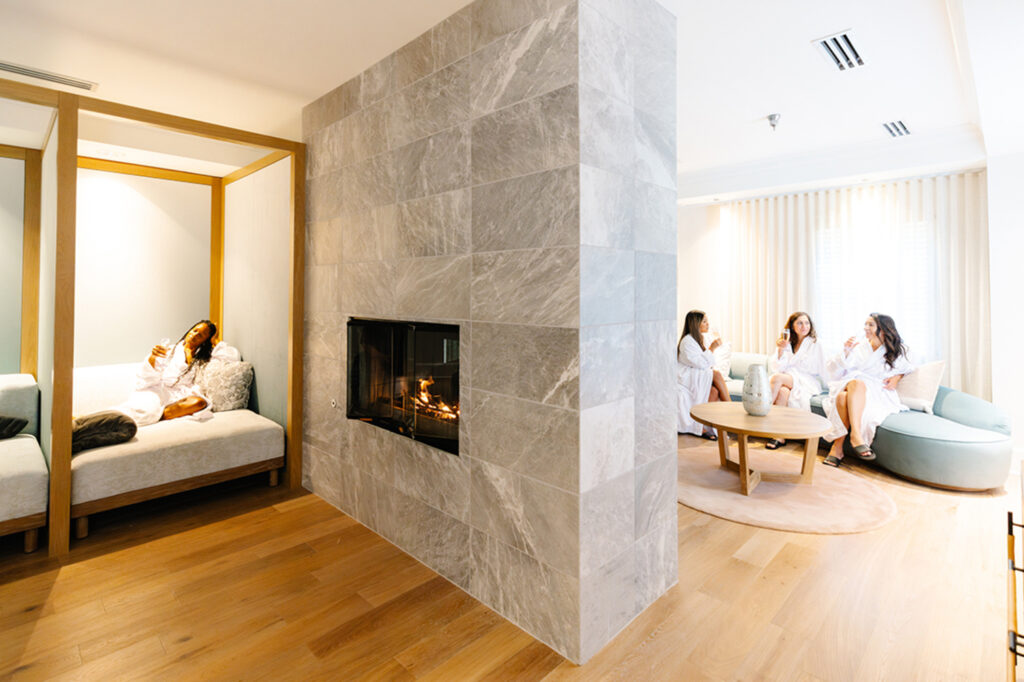
Hotel spas are one of the more underrated solutions to this. Resort-grade saunas typically operate at proper temperatures, within the humidity ranges the research describes, and in facilities designed for the alternating heat-and-cool ritual the Finnish tradition involves. What most people don’t realize is that you don’t need to book a room to use them: ResortPass offers day passes to hotel spas and wellness facilities across the country, which means the frequency the research recommends becomes genuinely attainable.
For regular sauna users, a day spa pass can bridge this gap—many passes providing full access not only to a sauna, but to other facilities including steam rooms, showers, hydrotherapy facilities, lockers, and fitness rooms. Spa passes start at just $25.
A note on safety
For most healthy adults and for patients with stable coronary heart disease, the safety picture is clear. As Hannuksela and Ellahham established in a comprehensive review for The American Journal of Medicine, sauna bathing “is well tolerated and safe” for the majority of people.
The contraindications for sauna bathing include: unstable angina pectoris, recent myocardial infarction, and severe aortic stenosis. Heart failure and cardiac arrhythmia are relative contraindications. Alcohol during sauna bathing significantly increases the risk of hypotension (severe low blood pressure) and arrhythmia and should be avoided. Anyone managing a significant cardiac condition should check with a physician first.
For everyone else, the evidence suggests consistency matters more than anything else. Three to seven sessions per week, at standard Finnish temperatures, for 15 to 20 minutes: that’s what the research studied, and that’s what produces outcomes.
Sauna benefits: FAQs
How often do you need to use a sauna to see benefits?
The research that produced the strongest outcomes tracked people using saunas four to seven times weekly. Three to seven sessions per week, each lasting 15 to 20 minutes, is the range the evidence supports. Once a month is unlikely to move the needle.
Is sauna use safe for people with heart conditions?
For patients with stable coronary heart disease or stable angina, sauna bathing is generally safe and well-tolerated. Contraindications include unstable angina, recent myocardial infarction, and severe aortic stenosis. Anyone managing a cardiac condition should speak with their physician before starting.
Can regular sauna use help with high blood pressure?
Multiple studies have documented meaningful short-term blood pressure reductions following individual sauna sessions, and long-term data from a 24.7-year study found a 47 percent lower risk of developing hypertension in frequent users. Sauna use is not a substitute for prescribed treatment, but the evidence for a blood-pressure effect is among the more consistent in this body of research.
ResortPass offers day passes to hotel spas and resort wellness facilities across the country, no overnight stay required. Find spa day passes near you.
Sources cited
Hannuksela, M. L., & Ellahham, S. (2001). Benefits and risks of sauna bathing. The American Journal of Medicine, 110(2), 118–126. https://doi.org/10.1016/S0002-9343(00)00671-9
Laukkanen, J. A., Laukkanen, T., & Kunutsor, S. K. (2018). Cardiovascular and other health benefits of sauna bathing: A review of the evidence. Mayo Clinic Proceedings, 93(8), 1111–1121. https://doi.org/10.1016/j.mayocp.2018.04.008
Laukkanen, J. A., & Kunutsor, S. K. (2024). The multifaceted benefits of passive heat therapies for extending the healthspan: A comprehensive review with a focus on Finnish sauna. Temperature, 11(1), 27–51. https://doi.org/10.1080/23328940.2023.2300623