New ResortPass data finds the barrier to rest isn’t time off—it’s permission.
Something strange has happened to rest in America: We know we need it. We say we want it. And yet, when the moment finally arrives to slow down, a quiet, familiar guilt tends to show up alongside it.
This is the tension at the center of the ResortPass 2026 Reset Report, a survey of 2,000 U.S. adults conducted by Talker Research in March 2026. The data set out to answer a straightforward question: how are Americans finding moments to recharge?
What it revealed was something more complicated: a culture that has made rest feel like something you have to earn before you’re allowed to have it.
The highlights
- Even when time off is available, relaxation guilt makes it difficult to enjoy
- Traditional vacations don’t deliver the rest people expect, instead adding stress via the hurdles of planning, cost, and logistics
- Short, local escapes are gaining appeal as a more realistic and effective way to recharge, especially for busy professionals and parents
Rest feels like something you have to earn
The numbers are striking. 72% of Americans say rest is something you have to earn. 40% say they feel guilty relaxing, even as 78% report they badly need a break. One in five cannot remember the last time they felt fully rested.
For women, the pressure runs even deeper. Close to one-third say they feel mentally or physically drained every single day, a burnout rate significantly higher than the general population.
For many Americans, the barrier to rest isn’t time. It’s giving themselves permission to take it.
Time off isn’t the problem
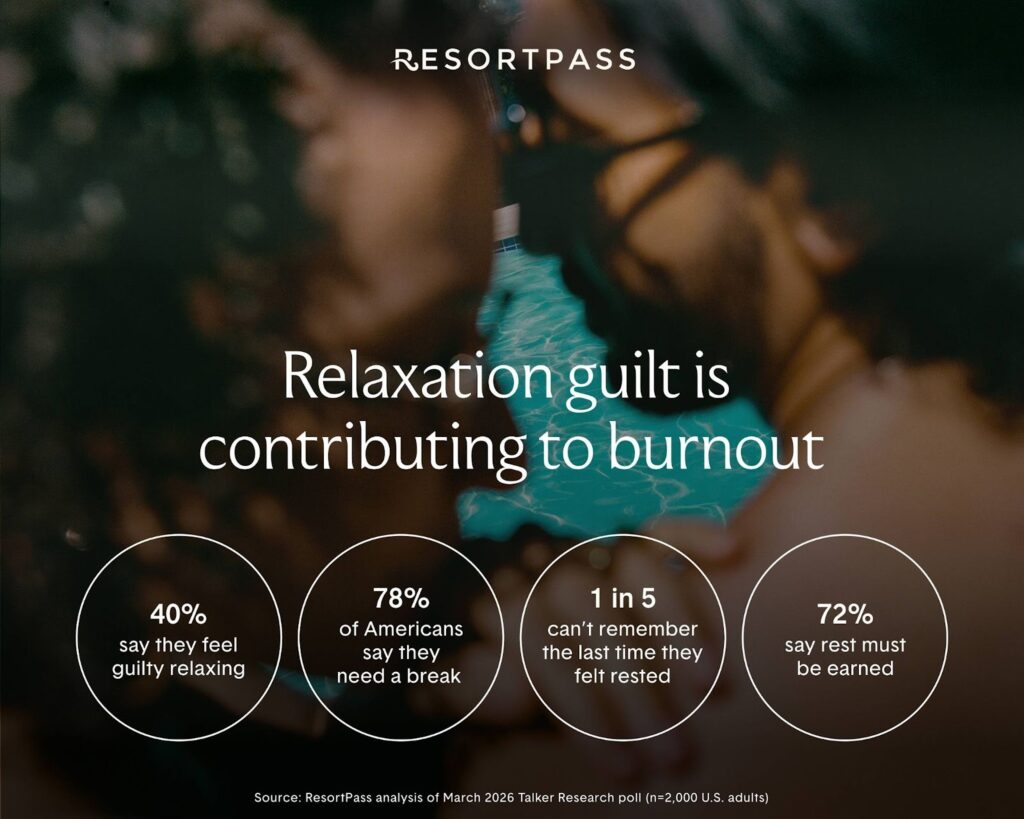
In a culture that glorifies burnout and celebrates constant productivity, relaxation guilt is preventing busy Americans from giving themselves a break.
Eight in ten professionals expect to end the year with unused PTO. Workload and the pressure to always be available are the most commonly cited reasons for not stepping away. And the guilt follows the paycheck: those earning over $100K report higher levels of relaxation guilt than the general population.
If anything, access to paid time off hasn’t solved burnout. Instead, it has exposed a deeper cultural issue. Not taking time off has become normalized—and in many workplaces, quietly rewarded.
Vacations aren’t delivering the reset people expect
The hope, of course, is that a vacation will fix it. Book the flights, find the hotel, get out of town, and come back rested. For most people, that’s not what happens.
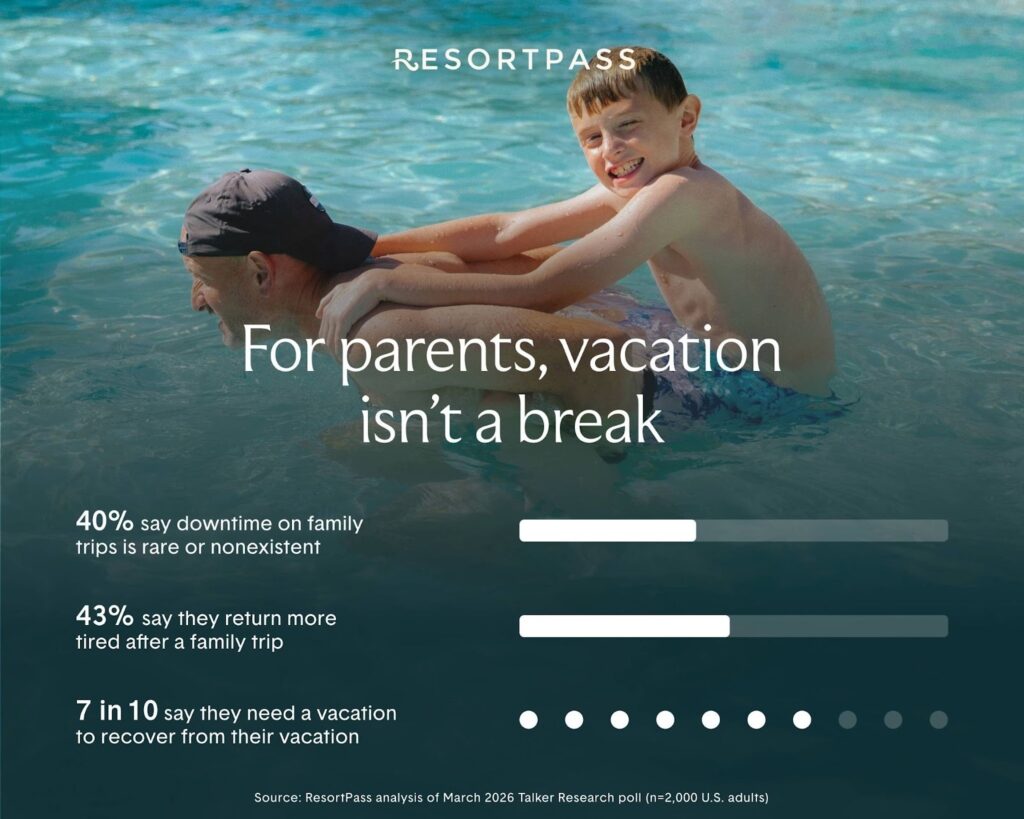
7 in 10 adults say they need a vacation to recover from their last vacation. The stress starts long before departure: in 70% of households, one person shoulders the full responsibility of planning flights, hotels, and activities. On average, Americans spend nearly 18 hours researching and booking a trip: more than two full work days dedicated to logistics before the vacation even begins.
For parents, the burden is heavier still. The concept of “mental load,” or the invisible labor of managing schedules, packing lists, and logistics for an entire family, doesn’t pause for a trip. It just relocates. 40% of parents say downtime on family vacations is rare or nonexistent. 43% say they return more tired than before they left.
Cost closes the door for many entirely. Nearly two-thirds of Americans cite expense as the biggest barrier to taking a large trip.
And even for those who do get away, the friction doesn’t stop at booking. One in four Americans experienced a significant travel delay in the past year—a reminder that the path to rest is rarely as smooth as the itinerary suggests.
People are turning to shorter ways to recharge
Even so, something is shifting. People are recognizing that waiting for a week off to finally feel rested isn’t a sustainable strategy.
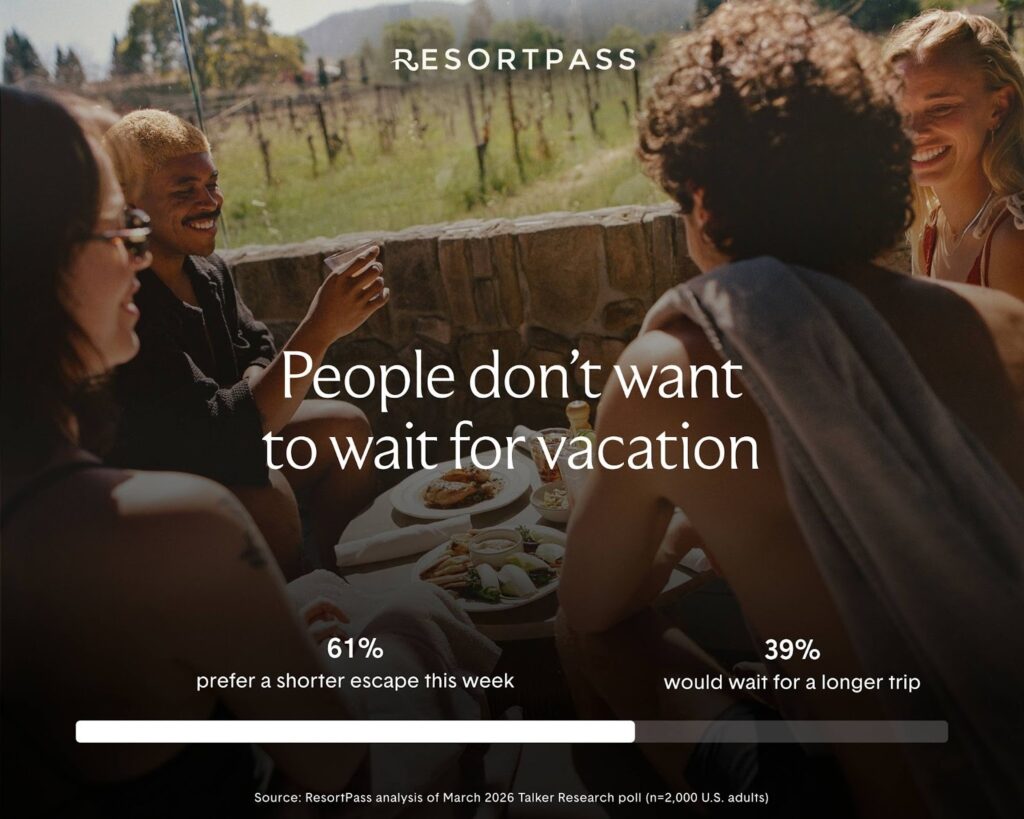
Just 5% of Americans say their ideal summer day would be productive. 76% say a relaxing day by a pool or spa sounds most appealing. And when given a choice, 61% say they would rather take a shorter, vacation-like escape this week than wait for a longer trip later. Only 39% would prefer to hold out.
The pull toward simpler rest shows up in how people remember summer, too. When asked about their happiest summer memories from childhood, Americans pointed to being outside (51%), having free time (43%), and spending time with family (39%). Just 16% said big trips defined their summers. What people remember most isn’t the scale of the experience. It’s how it made them feel.
What helps people reset is simpler than expected
Eight in ten Americans say being near water improves their mood. A similar share say they feel noticeably calmer after spending just a few hours by a pool or spa. Parents, perhaps unsurprisingly given the data above, are especially drawn to this: 76% say enjoying resort-style amenities for a single day, without an overnight stay, sounds appealing.
The picture the data paints is one of a quiet but meaningful shift in how people think about rest. Less about going far, more about stepping away more often (and with less friction). Smaller escapes, built into everyday life rather than saved up for once a year.
ResortPass is designed for exactly this: day access to hotel pools, spas, and resort amenities, no overnight stay required.
Reset Report FAQs
Why do Americans feel guilty relaxing?
ResortPass survey data from 2026 finds that 72% of Americans believe rest is something you have to earn, and 40% feel guilty when they do take a break. Researchers point to a culture that normalizes overwork and treats productivity as a measure of worth, making it difficult to step away even when time off is available.
What is relaxation guilt?
Relaxation guilt is the feeling of anxiety or discomfort that arises when taking time to rest, even when that rest is warranted or available. It is closely linked to burnout and is particularly common among high earners, parents, and women.
Why don’t vacations feel restful?
According to ResortPass 2026 data, 7 in 10 adults say they need a vacation to recover from their last one. The planning burden, cost, logistics, and pressure to maximize limited time all contribute to stress before and during a trip. For parents, 43% return from family vacations more tired than when they left.
What is the best way to recharge without taking a full vacation?
ResortPass data shows that 61% of Americans prefer a shorter local escape over waiting for a longer trip. Spending a few hours near water, such as at a hotel pool or spa, is associated with improved mood and reduced stress—without the cost or logistics of overnight travel.
Methodology
The ResortPass Reset Report is based on a March 2026 survey of 2,000 U.S. adults under the age of 60. The survey was conducted by Talker Research using a random double-opt-in methodology. Talker Research team members are members of the Market Research Society (MRS) and the European Society for Opinion and Marketing Research (ESOMAR).