A busy day can leave the mind several steps ahead of the body, replaying past conversations, anticipating the next task, and barely noticing what’s happening right now. Mindfulness is the practice of gently returning your attention to the present moment, including your thoughts, emotions, surroundings, and physical sensations, without immediately judging them.
That pause can make stress feel more manageable. It can also improve focus and create space for you to respond to emotions with greater balance instead of reacting automatically.
You don’t need long meditation sessions to begin; a few mindful breaths, a brief body check-in, or one screen-free meal practiced consistently can support mental wellness over time. Here’s a roundup of all the basics.
Common mindfulness terms
Let’s start with a few definitions, since understanding the terminology can make mindfulness resources and exercises easier to follow.
- Mindfulness: Paying attention to what is happening in a given moment with curiosity, and without immediately labeling the experience as good or bad.
- Meditation: A practice used to develop attention, awareness, and concentration.
- Grounding: A technique that brings attention back to the body or surroundings when stress or strong emotions feel overwhelming.
- Self-compassion: Responding to personal difficulties with the patience and kindness you would offer someone else.
- Emotional awareness: Identifying thoughts, emotions, physical sensations, and reactions as they occur.
- Mental wellness: Supporting emotional balance, healthy coping, strong relationships, and everyday well-being.
Mindfulness and meditation are related, but the terms are not interchangeable. Meditation usually refers to a dedicated, scheduled practice, while mindfulness can also be applied during ordinary activities such as walking, eating, or listening to another person.
Understanding mental wellness
Thoughts, emotions, stress levels, sleep, relationships, and daily habits can all influence one another, with cumulative effects. A demanding week may affect sleep, poor sleep may make concentration harder, and reduced concentration may create additional frustration.
Stress can also produce physical responses, including muscle tension, changes in appetite, headaches, fatigue, or difficulty sleeping. Learning to notice early changes in the mind and body can make it easier to pause and choose a healthy response.
A mental reset may be useful when you feel unusually distracted, impatient, tense, emotionally drained, or unable to stop thinking about work. Brief mindfulness exercises cannot remove every source of stress, but they can help you pause before deciding how to respond.

What are some examples of mindfulness practices?
Mindfulness can be practiced during everyday activities without special equipment or a long block of free time. The following exercises focus attention on experiences that are already happening.
Pause and use your senses
Stop briefly and notice what is around you. Identify something you can see, hear, touch, smell, or taste, but don’t intervene or try to change the experience.
You can practice sensory awareness while eating by noticing the food’s aroma, temperature, flavor, and texture. The same approach works while showering, washing dishes, or spending time outdoors.
Return to your breathing
Bring your attention to the natural movement of your breath. Notice where you feel it most clearly, such as your nose, chest, or abdomen.
When your attention wanders, recognize it and gently return to your breathing. Even a brief breathing pause can interrupt the feeling of rushing through a task.
Observe the present moment
Look around and notice the environment as it currently appears. Pay attention to light, sounds, temperature, movement, and physical sensations.
Take in each detail without deciding whether it is pleasant or unpleasant.
Check in with your body
Put away screens for a moment and check how your body feels. Identify any areas that feel tense, warm, heavy, restless, or relaxed.
A brief check-in can help you recognize how stress affects your body before you return to your day.
Practice grounding through the senses
During an overwhelming moment, name five things you see, four things you feel, three things you hear, two things you smell, and one thing you taste. Adjust the sequence when necessary, especially if certain senses are difficult to use.
This exercise gives you a clear task based on what is around you. You can use it quietly in many settings.
Common structured mindfulness exercises
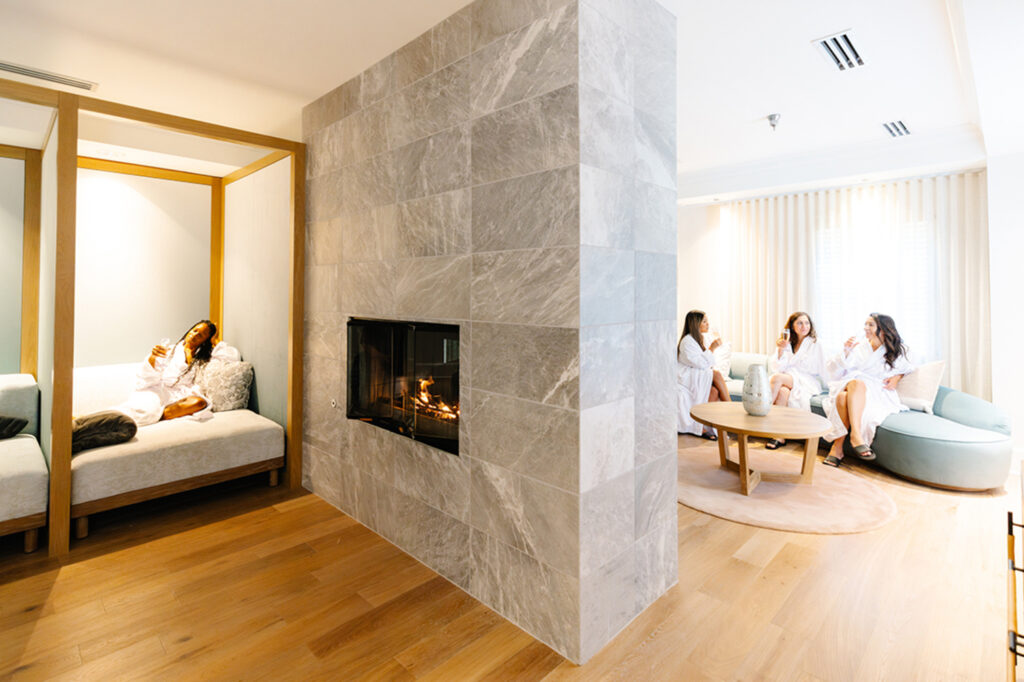
Structured practices involve setting aside a specific period for mindfulness. Choose a reasonably quiet place, like a bedroom, backyard hammock, or spa, silence unnecessary notifications, and settle into a comfortable position.
Distraction is expected. Each time you notice your attention has wandered, returning to the exercise becomes part of the practice.
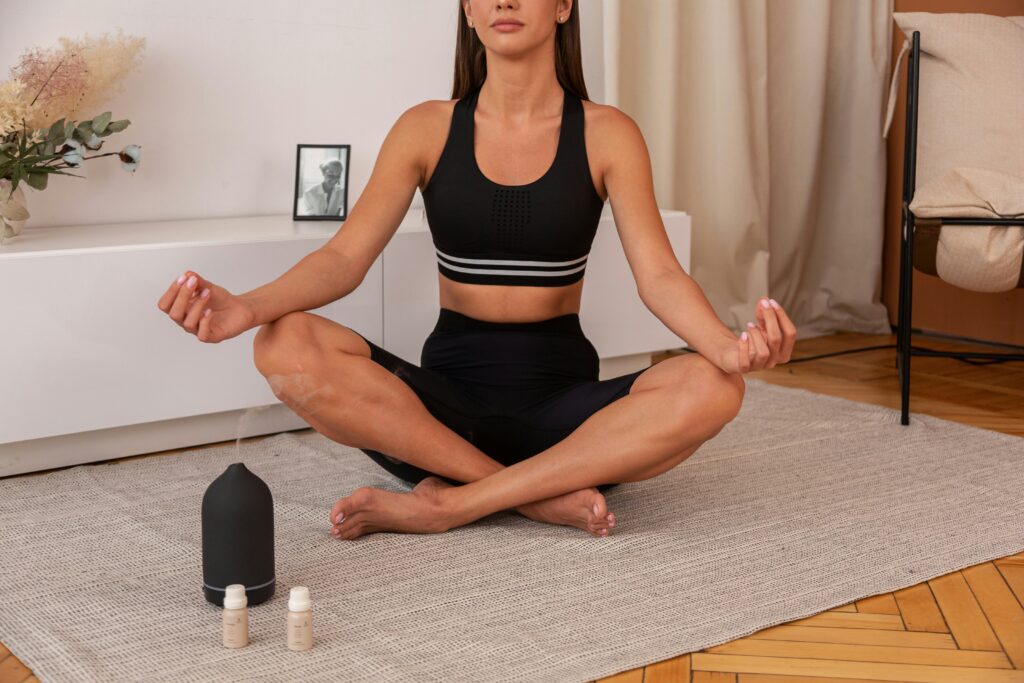
Mindful breathing
Focused breathing is a simple starting point because the breath is always available as a point of attention.
- Sit, stand, or lie in a comfortable position.
- Close your eyes or rest your gaze on one place.
- Notice one complete inhale and exhale.
- Continue breathing at a comfortable pace.
- When a thought or sound distracts you, notice it and return to the breath.
- Continue for one to five minutes before gradually extending the practice.
Avoid forcing unusually deep breaths if that feels uncomfortable. Focus on noticing your breath rather than controlling its pace.
Mindful body scan
A mental body scan moves attention slowly through different areas of the body. It can help you notice sensations or tension that may have gone unnoticed during the day.
- Sit or lie somewhere comfortable.
- Take a few comfortable breaths.
- Begin with your feet or the top of your head.
- Notice sensations in that area without trying to correct them.
- Move gradually through the legs, torso, hands, arms, shoulders, neck, and face.
- End by noticing the body as a whole.
Thoughts and emotions may appear during the scan. Recognize them, then return attention to the part of the body you were observing.
Mindful walking
Mindful walking combines gentle movement with awareness of the body and surroundings. It can be practiced indoors, in a yard, or along a safe outdoor route.
- Begin walking at a comfortable pace.
- Feel each foot lift, move forward, and return to the ground.
- Pay attention to balance, posture, and the movement of your arms.
- Observe nearby sounds, colors, air temperature, and physical sensations.
- When your thoughts wander, return to the next step.
Don’t walk unusually slowly unless doing so helps you concentrate. Safety should remain the priority, especially near traffic, stairs, or uneven surfaces.
Mindful observation
Choose an ordinary object, such as a leaf, cup, stone, or piece of fruit. Study its shape, color, surface, weight, and small details for several minutes.
When assumptions or opinions about the object arise, return to what you can directly observe. This exercise can help you practice focusing on one object at a time.
Bringing mindfulness into everyday life
Mindfulness is easier to maintain when it fits naturally into the day. Choose familiar activities as reminders to slow down, notice what you are doing, and return attention when it drifts.
During a conversation, listen to the other person’s full statement before preparing your response. Notice their words, tone, and body language, then pause briefly before speaking.
Routine activities can also become mindfulness cues. Try feeling the water while washing your hands, noticing your feet on the floor while waiting in line, or observing the first few bites of a meal without checking a screen.
Mindful eating involves noticing hunger, fullness, taste, smell, texture, and pace. It can begin with one snack or a few minutes of a meal rather than a complete overhaul of your eating routine.
Stress management and emotional well-being
Stress triggers vary from person to person. Deadlines, conflict, uncertainty, noise, financial concerns, and lack of rest are common examples, but personal patterns become clearer through observation.
When you notice a trigger, pause before responding. Take one slow breath, identify the emotion, and decide whether the situation requires immediate action or a later conversation.
Try not to ignore difficult emotions before you continue with the day. You might name the feeling, notice where it appears in the body, write about it, or discuss it with someone you trust.
Self-compassion can reduce the additional pressure created by harsh self-criticism. A simple response might be, “This is difficult right now, and I can take the next manageable step.”
Building healthy mental wellness habits
A realistic routine works better than one that depends on ideal conditions. Begin with a practice that fits your schedule, such as one minute of breathing after waking up or a short body scan before bed.
Several everyday habits can support mental wellness alongside mindfulness:
- Protect enough time for sleep and rest
- Spend time outdoors when your circumstances allow
- Take regular breaks from news, email, and social media
- Keep digital devices away during selected meals or conversations
- Maintain contact with friends, relatives, or community groups
- Make time for movement and activities you enjoy
Consistency is important, but it doesn’t mean you have to do the same exact exercise every day. You might use breathwork during a busy morning, mindful walking during lunch, and journaling only at the end of the week.
Journaling and reflection practices
Journaling can help organize thoughts that are difficult to sort through or that keep returning. The entry can be one sentence, a short list, or a longer reflection.
A gratitude journal records specific experiences you appreciated that day. Instead of writing a broad statement such as “I am grateful for my family,” note a particular conversation, gesture, or shared moment.

Daily check-ins can use a few repeated questions:
- What emotion am I noticing right now?
- What physical sensations are present?
- What has taken most of my attention today?
- What do I need more or less of?
- What is one manageable step I can take next?
Reviewing entries occasionally may reveal patterns involving sleep, stress, relationships, workload, or coping habits. Look for gradual changes rather than expecting every day to show clear progress.
Knowing when to seek additional support
Mindfulness is one way to support mental wellness. It doesn’t replace professional support such as counseling, medical care, or crisis services when those are needed.
Consider talking with someone you trust or a mental health professional when stress, anxiety, sadness, anger, distressing thoughts, sleep changes, or other concerns feel difficult to manage alone. Changes that interfere with work, relationships, self-care, or daily responsibilities deserve attention.
Anyone in the United States experiencing emotional distress or thoughts of suicide can call or text 988 to reach the Suicide & Crisis Lifeline. The service is available at any time, and immediate danger should be addressed by contacting local emergency services.
Small steps toward greater well-being
Begin with one simple practice that feels manageable. You might notice the sounds around you during a short walk, pause before opening your email, or spend one minute observing your surroundings.
Repeat the practice often enough for it to become familiar, then adjust it as your needs change. Mindfulness becomes more natural with repeated practice, so progress matters more than perfection.
Sources cited
American Psychological Association. (n.d.). Self-care. https://www.apa.org/research-practice/self-care
Centers for Disease Control and Prevention. (2026, May 12). Managing stress. U.S. Department of Health and Human Services. https://www.cdc.gov/mental-health/living-with/index.html
Greater Good Science Center. (n.d.). Mindful breathing. Greater Good in Action, University of California, Berkeley. https://ggia.berkeley.edu/practice/mindful_breathing
Mayo Clinic Staff. (2026, January 21). Mindfulness exercises. Mayo Clinic. https://www.mayoclinic.org/tests-procedures/meditation/in-depth/mindfulness-exercises/art-20046356
Mental Health America. (n.d.). Self-help tools. https://mhanational.org/resources/self-help-tools/
Mindful Staff. (2018, December 12). How to practice mindfulness. Mindful.org. https://www.mindful.org/how-to-practice-mindfulness/
National Alliance on Mental Illness. (n.d.). Warning signs and symptoms. https://www.nami.org/warning-signs-and-symptoms/
National Center for Complementary and Integrative Health. (2022, June). Meditation and mindfulness: Effectiveness and safety. U.S. Department of Health and Human Services. https://www.nccih.nih.gov/health/meditation-and-mindfulness-effectiveness-and-safety
National Health Service. (n.d.). Mindfulness. NHS. https://www.nhs.uk/mental-health/self-help/tips-and-support/mindfulness/
Office for Health Improvement and Disparities. (2022, February 28). Wellbeing and mental health: Applying all our health. GOV.UK. https://www.gov.uk/government/publications/wellbeing-in-mental-health-applying-all-our-health/wellbeing-in-mental-health-applying-all-our-health
Substance Abuse and Mental Health Services Administration. (2023, April 24). Find support. https://www.samhsa.gov/find-support
U.S. Department of Veterans Affairs. (n.d.). Mindfulness Coach (Mobile app). VA Mobile. https://mobile.va.gov/app/mindfulness-coach